2011
Richard Kalich's latest protagonist is Richard Kalich, but one critic views this postmodern occupation of the novel as an opportunity - even an encouragement - to forget about him.
Beginning his review by reflecting on the book's cover art, John Bruni speculates that a punk aesthetic runs throughout Alaimo's posthuman environmentalism. Providing brief treatments of each chapter, he argues that the book's trans-corporeal understanding of the relationship between bodies and places disrupts "the very heart of what we know about ourselves."

How does one write science fiction when the atom bomb (and later 9/11) makes the future seem impossible to predict? Justin Roby reviews Paul Youngquist's Cyberfiction: After the Future, which explores how postwar "cy-fi" critiqued life in the age of cybernetic control systems.
"What would a history of postwar U.S. literature look like that did not take society as its major organizing principle?" Daniel Worden reviews Michael Clune's American Literature and the Free Market, 1945-2000, which traces the emergence of the "economic fiction," in which the market is neither a mystified form of social relations nor an expression of individual values, but a virtual economy that structures experience.
Anthony Warde traces Daniel Punday's analysis of the intertwining strands of contemporary "fictionality," the different modes - from "myth" to "assemblage" - by which invented stories are legitimated. Punday's work implies that the active construction of 'life-fictions' is becoming more significant in contemporary technoculture, a view that runs counter to the more pessimistic view of agency in Baudrillard's Simulacrum America and other accounts of a wholly 'virtual' reality.
2010
David Haeselin reviews Ted Striphas' The Late Age of Print, which explores the crucial role of book publishing in today's society of controlled consumption. The oft-repeated death knell for reading, Striphas argues, is the equivalent to a Fox News jeremiad on the death of American morality: it's wholly ideological and selective.
2009
Bruce Clarke reviews Joseph Caroll's Literary Darwinism and (like Laura Walls in her review of E.O. Wilson ten years earlier in ebr)identifies the LD project not as "consilience" so much as the colonization of the literary humanities by one branch of the biological sciences. In Caroll, Clarke discerns a Darwinian fundamentalism to match the Christian fundamentalism that can be observed in Clarke's own Lubbock, TX habitat.
Scott Hermanson considers the Companion's success in negotiating its own position between digital literature and print media.
2008
Dave Ciccoricco reviews Michael Joyce's novel of network culture, Was. Seeing an inversion of Russian formalism in Joyce's work, Ciccoricco explores how Joyce's novel attempts to "reconcile the polylinguistic, stylistic, and ludic difficulty" of the text with an "affinity for the quotidian."
Michael McDonough reviews Brian Kim Stefans' book of poetry Before Starting Over, asserting that Stefans is concerned with the redefinition of critical discourse in the face of the loss of the singularity of the work of art. Stefans is not out to substitute an ideology of surface and take our deep meanings away. He mines contemporary poetics with an encyclopedic attention while resisting dogmatic assertions.
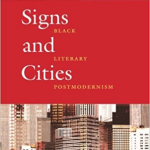
Amy J. Elias reviews Madhu Dubey's second book Signs and Cities: Black Literary Postmodernism and gauges the argument that we can locate within literary history a distinctive African American strain of postmodernism.
2007
For Jay Murphy, Clayton Eshleman in his JUNIPER FUSE makes a resounding case for lived experience, for the tortuous growth, however partial or fragmented, as rooted in self-suffering as modes of vision and dream.
Stephen Hawkins reviews Ronald Schleifer's Analogical Thinking, arguing that despite Schleifer's attempts at interdisciplinarity, his book falls short of a truly collaborative approach.
One of a series of eco-critical reviews, Stephen Dougherty explores the new ways that "matter is made to matter" in Ira Livingston's writing on science and literature. The payoff of an ecocriticism grounded in the materiality of language itself, can bee seen by the strong political positioning toward the end of Dougherty's essay.
Steven Shaviro reviews Shelley Jackson's Half Life, the first print-based novel by a pioneering hypertextualist.
2006
tobias c. van Veen reviews Paul D. Miller a.k.a. Dj Spooky that Subliminal Kid's MIT publication, Rhythm Science.
Bruce Clarke reviews Stephan Harding's Animate Earth and James Lovelock's recent book on Gaia, the mother of all systems.
Linda Brigham reviews Katherine Hayles' My Mother was a Computer: Digital Subjects and Literary Texts.
Tim Keane reviews David Matlin's Prisons: Inside the New America.
Sascha Pöhlmann reviews Lance Olsen's 2006 novel Nietzsche's Kisses.