2024
With this brief look at Large Language Model surrealism, Nick Montfort locates and identifies "the id of the internet, of publishing, of podcasting."

Scott Rettberg, director of the Center for Digital Narrative (CDN), in conversation with Nick Monfort, who is leading the CDN's Computational Narrative System's research node.

Daniel Punday reviews Andrew Klobucar’s edited collection of essays, The Community and the Algorithm: A Digital Interactive Poetics.
2023
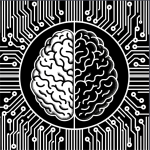
Multimodal AI trained on YouTube-TikTok-Netflix (object-segmented and identified audio-video-speech) and public domain science data (that exceeds the spectrum of human sensorial field) will be grounded in a world that is in some ways vaster than that experienced by a single human neurophysiology.
Accepting Søren Bro Pold's proclamation that "the social knowledge base of the University has already disappeared", Davin Heckman locates a few, forward looking prospects for a reconstruction of the Humanities in Jean-François Lyotard's "famously sloppy" Postmodern Condition (1971), Hannah Arendt's Human Condition(1958), and Imanuel Kant's prescient hope that the University could serve as a "mediating nexus among a growing array of conflicting professional tendencies."
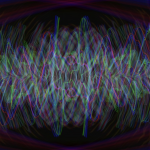
In this anticipation of John Cayley's ebr essay on Artificial Intelligence, Scott Rettberg contextualizes some of the ethical and systemic problems of ChatGPT and argues that works of electronic literature and digital art might serve as tutor texts for understanding effects of technological mediation on humanity.

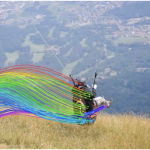
Cayley's image is an apt illustration of an essay that's also a work of 'digital language art.' Although Cayley incorporates new material and newly contextualized examples, referring chiefly to his own work, what follows is also the reconfigured rewrite of a recent essay for a series of conferences and a peer-reviewed online journal, Political Concepts, which can be found online at: https://www.youtube.com/watch?v=LDJRQYRWpvQ.
In his response to John Cayley, Dougherty takes the current concern with AIwriting as an opportunity to revive one of ebr's long-running threads; namely: the critical, contrarian riPOSTe.
Pold extends Heckman's "thrilling (if not chilling)" critique to left-wing understandings and critical takes by theorists such as Walter Ong, Bernard Stiegler, and Vannevar Bush.
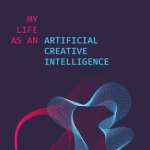
In his review of Mark Amerika's My Life as an Artificial Creative Intelligence (2022), David Thomas Henry Wright highlights Amerika's negotiation of human, nonhuman, symbiotic creative practices in comparison with more traditional (including traditionally experimental) forms of writing.

Davin Heckman offers thoughts on Matthew Kirschenbaum's now well-known essay in The Atlantic, The Textpocalypse (2023). Contemplating our own limits in digital media scholarship, including the reinforcing of technological determinisms, Heckman discusses the concept of transindividuation and its relationship with technology, or, the process of becoming an individual through participation in culture and society.
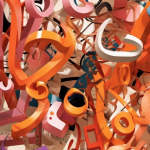
Avoiding the "twin pitfalls of either Luddite dread or AI boosterism," in this essay George MacBeth offers a close Re-Reading of Jhave's ReRites.
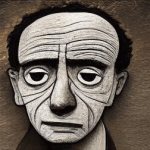
In this republished Medium essay, Ian Demsky takes a personal and playful dive into AI image generation.
2022
In his review of Glitch Poetics, Richard Carter finds more than a close reading of contemporary e-lit and AI enhanced writing. In a book that is both aesthetic and machinic, critical and creative, Jones explores the nature of writing itself "and, indeed, reading, in an environment saturated by the rhythms and predilections of digital code."
"I too am a psychic automaton." Mark Amerika, a founding publisher of ebr, shares the onto-operational sources of his (capital C) Creativity with ebr editor Will Luers.