2020
Discussing the works of three digital creative practitioners working in Ireland, Anne Karhio situates Ireland itself as a case study for demonstrating the ways in which electronic literature as a seemingly global and transnational practice can confront the complexly situated realities of everyday embodiment, technological materiality, and politicization of national borders. She thus recommends electronic literature be seen as more crucial part of digital arts and humanities research in Ireland and elsewhere.

Here is the transcription of an extended conversation between multimedia artist and author Warren Lehrer and Brian Davis (a recent contemporary literature and poetics PhD grad from University of Maryland) that began in February 2020 at Lehrer’s studio in Queens, NY soon after the opening of the exhibition “Warren Lehrer: Books, Animation, Performance, Collaboration” at the Center for Book Arts in Manhattan. They discuss Lehrer’s recent book, Five Oceans in a Teaspoon (2019), a collection of visual poems written by Dennis J Bernstein, visualized by Lehrer, as well as Lehrer’s long running commitments to visual literature and collaborative art going back to the early 1980s. In addition to discussing several of Lehrer’s bookish projects, including his novel A Life in Books (2013), they discuss the different writing and printing technologies Lehrer has worked with and in over the years, as well as current issues in contemporary literature studies, such as documentary aesthetics, autofiction, and satire.
Marino, Douglass, and Pressman describe their award-winning collaborative project, Reading Project: A Collaborative Analysis of William Poundstone’s Project for Tachistoscope {Bottomless Pit} (2015). Given the novelty of Poundstone’s work and its deviation from traditional forms of print-based literature, the authors break down the methods and platforms that allowed them to respond with new ways of reading—what they call “close reading (reimagined).” Indeed, their respective methods of interpreting Poundstone reminds that the field of e-literature not only brings new literary forms to our critical attention, but also necessitates that hermeneutics adapt to digital contexts as well.
Reading Project was awarded the ELO’s 2016 N. Katherine Hayles Award for Literary Criticism on Electronic Literature.
Seiça describes modification as an art practice meant to subvert and divert from what we—as readers, spectators, and also consumers—expect from technological apparati and platforms. He extends the study of mods to “lit mods”—including art, games, and literature.
In particular, Seiça notes that the learning curve for modding has changed: where in the past, it may have taken a certain amount of user knowledge, modification may now be automated (for instance, through Instagram filters). More importantly, he asks what lit mods show us about literary practice and literary criticism. Where fast-moving content—fast-moving e-literature and e-poetry included—may defy interpretation, so analysis is strengthened by breaking down their mechanisms.
Via close readings of Eugenio Tisselli's degenerative and regenerative, ¨paired works that become progressively less comprehensible the more users interact with them," we are able to grasp the ecological costs of the time we spend online. And we can begin to recognize, with Justin Berner, a concern with permanence and ephemerality in the digital sphere that is not unique to the work of Tisselli. It is, rather, a common thematic concern throughout the history of electronic literature. The term that Berner advances for this literary countertext to the instrumentalism of the Digital Humanitiers, is digital posthumanism.
Roderick Coover and Scott Rettberg reflect on the cultural values, political debates, power structures and architectures of exploitation underlying much of contemporary digital culture. As digital artists and collaborators, they also identify aesthetic reactions that actually combat what they critique. But for this to happen, we need literary works that are themselves produced, and actively circulating within digital environments.
A portion of the essay, focused on the ToxI*City project, is adapted from an earlier discussion published in ebr: Voices from Troubled Shores: Toxi•City: a Climate Change Narrative
In this contribution to her co-edited collection, [Frame]works, Saum brings to the digital humanities both makers and theoreticians, gnosis as well as poiesis, school teachers as well as research professors.

Rettberg and Saum introduce a collection of essays, presented at the Summer 2019 [Frame]works conference at the University of California, Berkeley, that bring literary criticism and creativity (equally) to bear on the digital humanities.
On the database itself as a cultural and textual artifact, a site where reading and interpretation combine with quantitative methods.

Berens asks: Should the e-literature community include third-generation works in collections, syllabi, databases, prizes? A related question: do third-gen makers have a role in “decolonizing” e-literature? Who or what “colonizes” e-lit? E-literature, like earlier avant gardes, began as a coterie and has become a scholarly field. Using the comparison of a field versus a walled garden, the essay examines critiques of e-literature and variations on field definitions. It ends with two ideas about how to "decolonize" e-literature; about how equity and inclusion work in tandem with decolonization, but are not the same thing; and why decolonization efforts are urgent in the context of pandemic and protests supporting Black lives and racial justice.

Whilst reading Stéphane Vanderhaeghe’s dystopian fiction and touching on Bernard Stiegler's Age of Disruption, Greg Hainge explores the world that now reads us via a universal digitisation.
In the course of her wide ranging review of Scott Rettberg's Electronic Literature, Anna Nacher offers a glimpse into "semi-peripheral avant-gardes" that are more open than other fields of digital culture to decolonization and not restricted to the Anglophone world.
After a programmatic attempt to taxonomize the genre of biographical fiction, Lackey's actual interviews with the genre's representative authors tend to uphold the willfully untamable nature of fiction. Image by Joanna Portelli
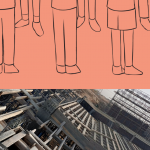
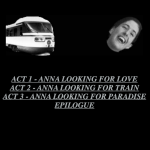
A critique of Third Generation, web based electronic literature from a first generation maker and author of "The Moving Word" (2000), Janez Strehovic. Image from Olia Lialina's Ann Karenin Goes to Paradise
Returning to his 2010 essay, “Electronic Literature as World Literature,” Tabbi extends those arguments in light of community built scholarly databases that have since emerged and in contrast to an uncritical tracking of “views, citations, downloads and occasional shared themes” (not to mention an increased precarity of authorship, where one’s scholarly work is basically given away).
For digital practices to be literary, Tabbi argues, our selections need to circulate within various institutional, academic, curatorial, and cultural structures – each of which is devising its own set of relations to the digital. This essay aims to initiate those ongoing conversations and evaluations in the field of born digital, electronic literature. In so doing, Tabbi suggests how acts of close reading can bring scholars into closer contact with one another and also activate the databases where e-lit archives are presently stored, read, curated, and mined for verbal and perspectival patterns. (Which have been described, in broad outline as a kind of distant reading.)
A comprehensive summary of a career that, unlike those of Warhol, Lichtenstein, Katz or most other contemporaries, lets us recognize Joe Brainard as an antecedent of our current, dispersed and all-embracing digital arts practices. As Nathan Kernan argues in 2019, our multimodal online habitus “looks more and more like a Joe Brainard world.” Wojciech Drąg takes us further into Brainard's lifelong refusal of artistic grandeur. An aesthetic of visual attention that purifies objects and pieces of writing where Brainard wonders if he can ¨get by without saying anything.¨

Circularity, performativity, authorial intervention, digressions, interruptions, collage, segmentation, prolific examples, line breaks and humor: Hazel Smith brings each of these approaches and stances to bear on Charles Bernstein's poetic essays and essayistic poetry. In the spirit of which, Smith presents her own essay in parallel sections. The main column advances her critical argument, while the second discontinuous column presents a "Deep Text" generated by Roger Dean, who applied the computer platform Python to word sequences from Smith's first column. image: Charles Bernstein

Pold and Erslev explore third-wave electronic literature -- a practice situated in ¨social media networks, apps, mobile and touchscreen devices, and Web API services” (Flores). At the next conceptual level, however, literary practices of this kind unavoidably take part in representing and reconstructing the metainterface - a space of data collection, standardization, commodification and redistribution that, for better or worse, is our context for a contemporary data realism.

Following the work of Jennifer Gabrys (in Program Earth), Carter contends that electronic literature has the potential to function as a mode of experimental sense-making. By exploring works by Tina Escaja, Mark Sample, and J. R. Carpenter, Carter reveals the limits and potentials of our data-driven epistemes - to expose that which goes unseen, and highlight its significance for how we come to know and respond to the challenges ahead.
A look at experimentation with crypto-machinic codes in Star Foster’s and David Ravipinto’s Slouching Towards Bethlehem.
image by flickr artist Art Hakker