2026
Continuing the celebration of Joseph Tabbi's work, John Cayley discusses Tabbi's foresight and ability to gather his peers together, which led to the creation of vital knowledge infrastructure for the blossoming field of electronic literature.
N. Katherine Hayles, in a personal contribution to the Celebrating Joseph Tabbi gathering, details the many ways her and Tabbi's paths have crossed over the decades. Noting the changes she's observed in Tabbi over time, Hayles reflects on the positive outcomes of aging.
In her speech, originally given at Joseph Tabbi’s festschrift, Tegan Pyke details how she met Tabbi and became a part of two of his key knowledge infrastructure projects. Discussing Tabbi’s innate ability to connect with people and collaborate, Pyke frames community building as a vital part of Tabbi’s academic legacy.
Stuart Moulthrop's meditation on AI artistic production explores the pareidolia at play in human interactions with generative models while arguing, via Wim Wenders' Until the End of the World (1991) and Greta Gerwig's Barbie (2023), for a loving approach to humanity's newest tools.

In a brief, personal message to Joseph Tabbi, Søren Bro Pold reflects on the many ways Tabbi contributed to the academic community surrounding electronic literature and the importance of electronic book review as a lasting arena for open discussion in an age of closed platforms.
In ebr co-founder Mark Amerika's speech from Joseph Tabbi's festschrift—originally given at the University of Bergen, Norway—Amerika explores the founding of electronic book review, the radical foresight Tabbi provided, and the journal’s links to post-publishing practice. As part of this, Amerika poses Tabbi's legacy not as something fixed, but as a challenge of continuing reconceptualization.
Anna Nacher connects the ecosystem within Coimbra's Biblioteca Joanina to networks of care within academia and, in this speech originally given at Joseph Tabbi's festschrift, thanks Tabbi for his role as friend and mentor. As part of this, Nacher stresses that time is essential to building the type of service Joe has performed through his career; the building of community.
In his opening speech at Joseph Tabbi's festschrift, Scott Rettberg details Tabbi's journey through academia, his many achievements, and the projects he founded. Rettberg also reflects on his friendship with Tabbi, which started in Chicago in 1999 and, over the decades, has spanned the globe and numerous life events.
In this essay, David Ciccoricco reflects on his early challenges in the then-emerging field of electronic literature and the pivotal role Joseph Tabbi played in Ciccoricco’s studies. In doing so, Ciccoricco sees the similarities between his and Tabbi’s thinking. Namely, that literary narratives create a reciprocal loop between media and cognition.
Bengü Demirtaş's analytical review of Joseph Conte's latest book, takes the reader on a blow-by-blow breakdown of Transnational Politics in the Post-9/11 Novel's central arguments. While praising the book's positives, Demirtaş reveals the difficulty both Conte and the transnational novelists he examines encounter in 'representing the unpresentable'.

2025
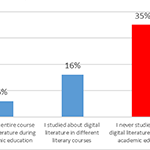
Eman Younis and Hisham Jubran's study investigates Arab university students' exposure to digital literature and their attitudes toward it. In doing so, they discover students feel the inclusion of digital literature in university-level literature courses should be a scientific necessity and that its absence in the curriculum compromises their professional development.
Cecily Raynor reviews Cartografía crítica de la literatura digital latinoamericana, a collection of essays that shines the spotlight on the vast and diverse corpus of Latin American electronic literature.

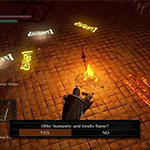
Austin Anderson applies a videogame formalism methodology to Dark Souls and argues that the game's various ludic-textual structures challenge player expectations, encouraging them to engage with the game's multiplayer systems and explore fan-made paratextual materials. By defining the player's movement between these structures as an act of hyperlinking which creates a networked community, Anderson identifies these as key characteristics of what he calls the 'networked hyperlinked videogame'.
This time on Off Center, Scott Rettberg is joined by Sarah Edmands Martin, a designer and researcher at the University of Notre Dame. Her research takes place at the intersection of visual communication design, critical fabulation, and media aesthetics. In this episode they discuss speculative design.

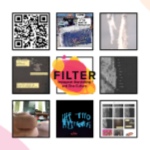
Sarah Whitcomb Laiola and Richard Snyder share their experience of cataloguing Instagram 'zine Filter for a travelling exhibition with The NEXT, the Electronic Literature Organisation's museum, library, and preservation space. Arguing that platforms are not merely tools for distribution but shape the very literariness of a work, Laiola and Snyder suggest that e-lit archival practices must evolve to recognize and account for the integral role contemporary social media platforms can play.
In these edited and approved transcripts from interviews conducted by Will Luers for the ebr@30 online commemoration, Ewan Brenda, Davin Heckman, Lori Emerson, Steve Tomasula, Lai-Tze Fan, Rob Wittig, Will Luers, and Tegan Pyke reflect on how they came to know Joe Tabbi and got involved with ebr.
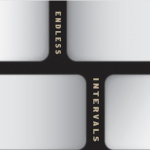
Will Luers contributes to current debates on AI by engaging with Jeffrey West Kirkwood's Endless Intervals: Cinema, Psychology, and Semiotics. Luers examines the parallels between AI and cinema technology as "thinking machines," both structured around intervals that produce perceptual and conceptual unities. What we have, in cinema and AI no less than human cognition, "is a reevaluation of the unity of consciousness."
Gabriela Jarzębowska reviews Interpreting Meat by Teddy Duncan Jr. By unmasking the hidden libidinal and discursive investments in meat, Duncan urges us to imagine a different kind of relationship with animals—one grounded not in domination or guilt, but in awareness, responsibility, and a reshaping of desire itself.

Hannah Ackermans introduces The Living Glossary of Digital Narrative via a discussion of digital communities and unintentional acts of exclusion, highlighting the importance of a shared vocabulary for accessibility in scholarship.

Rob Wittig and Talan Memmott reminisce about their favorite Netprovs, discuss the ways improvisation on the Web can be tackled, and theorize the future possibilities of the Netprov form after a step back from the platform formerly known as Twitter.