2004
Mark Bernstein and Diane Greco address "the utility question."
Eastgate Systems alumns Diane Greco and Mark Bernstein explain two "exotic tools for hypertext narrative."
Ken Perlin finds hypertext templates useful as they are used, not in tool form.
Camille Utterback figures the mouse click as weakly interactive.
Techno-poet Stephanie Strickland surveys the digital artistic practices of her peers and presents a "paradigm for interaction."
Stephanie Strickland makes marks an intervention across the "I."
Choosing between James Joyce and Stephen King means choosing between engagement and immersion. Or does it?
Who says hypertext readers have more brains than gamers? Not Henry Jenkins.
Are actors really acting when they're characters? How about characters - can they really act? Richard Schechner asks twice.
J. Yellowlees Douglas and Andrew Hargadon on the affective side of hypertexts via "schemas, scripts, and the fifth business."

From the Oracle of Delphi to the Wizard of Oz, it is clear that "if we attack we will destroy a great empire." The only question that remains, is which one?
R.M. Berry on the recuperation of politicized language, in (and through) the fiction of Marianne Hauser and Lidia Yuknavitch.

Author Lucy Corin opposes the emotionalism of genre fiction to the deeply emotional formalism in the fiction of Harold Jaffe, Patricia Eakins, and Janet Kauffman.
Markku Eskelinen reiterates the bounds of ludology.
Lisette Gonzales reviews a book of essays by Matthew Fuller that examines the way we are programmed by software.
Dave Ciccoricco returns to Stuart Moulthrop, considers Operation Enduring Freedom (2003) in light of Operation Desert Storm (1991), and consults the annals of World War II for a likely source of "Victory Garden," the title of Moulthrop's 1991 network fiction on the Gulf War.
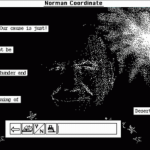
Kiki Benzon on narrative ecology and the "fradulence paradox" of Oblivion.
Andrew Walser introduces a gathering of essays on and by the novelist Joseph McElroy.
"Sedgwick's emphasis is on generating concepts that add to the complexity and inclusiveness of our representations, rather than trying to prescribe the right revolutionary path." Melissa Gregg reviews Eve Sedgwick's Touching Feeling.