2023
A post-closing catalog essay on a curious and original exhibition, one that rethinks the very idea of a group show, from singular research journeys by Kate Collyer (not her first) to Alaska, Megan Porpeglia to Sardinia (on a residency for the first time visiting her family roots), and Lorrie Fredette to Cape Cod. Like McElroy's own literary works, these twenty-two artworks are presented through several shifting lenses.

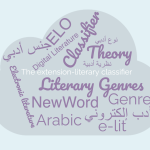
Reham Hosny (University of Cambridge and Minia University) asserts that works of e-lit resist straightforward classification due to their "hybrid and mosaic nature." This complexity poses formidable hurdles in the development of computational models aimed at categorizing e-lit into distinct genres. The challenge is further compounded by issues such as media format obsolescence, ephemerality, interactivity, and the wide array of manifestations across different platforms. Despite these formidable challenges, Hosny not only explores potential solutions but also provides a comprehensive framework for understanding the core issues associated with the classification of e-lit.
Accepting Søren Bro Pold's proclamation that "the social knowledge base of the University has already disappeared", Davin Heckman locates a few, forward looking prospects for a reconstruction of the Humanities in Jean-François Lyotard's "famously sloppy" Postmodern Condition (1971), Hannah Arendt's Human Condition(1958), and Imanuel Kant's prescient hope that the University could serve as a "mediating nexus among a growing array of conflicting professional tendencies."
Martin reviews Astrid Ensslin's Pre-Web Digital Publishing and the Lore of Electronic Literature, a book that addresses the knowledge gaps surrounding the early era of digital creation and publishing, while testifying to the necessity for multidisciplinary approaches to this field of study. Martin discusses the reconstructivist stance from which Ensslin labors to embed digital literature into our larger understanding of the literary arts.

Scott and Jill Retberg, directors of the Center for Digital Narrative (CDN) at the University of Bergen, discuss their motivations and goals for the new research center. Digital narrative encompasses various fields such as electronic literature, game studies, AI, VR, social media narratives, and computational narrative systems. The podcast aims to explore the frontiers of digital narrative by engaging with researchers, artists, and authors in these fields. CDN aims both to produce new research and creation in digital narrative and to present ideas in a more accessible way, such as through exhibitions and popular forms of publication to reach a broader audience. The Off Center podcast is a released on a biweekly basis, and we will be releasing selected transcripts each month on ebr.

In this anticipation of John Cayley's ebr essay on Artificial Intelligence, Scott Rettberg contextualizes some of the ethical and systemic problems of ChatGPT and argues that works of electronic literature and digital art might serve as tutor texts for understanding effects of technological mediation on humanity.

On this first Sunday in July 2023, as the Electronic Literature Organization prepares for its meeting in Coimbra, Portugal, we present a set of reflections by four ELO members who co-organized this Organization's 2021 conference fully virtual conference, titled "Platform (Post?) Pandemic." What we have is an insightful critique of platform conferencing. The concepts of datarama turned dadarama offer a refreshingly literary way of reorienting the discourse of the ELO's annual conference.
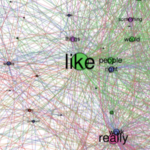
Cayley's image is an apt illustration of an essay that's also a work of 'digital language art.' Although Cayley incorporates new material and newly contextualized examples, referring chiefly to his own work, what follows is also the reconfigured rewrite of a recent essay for a series of conferences and a peer-reviewed online journal, Political Concepts, which can be found online at: https://www.youtube.com/watch?v=LDJRQYRWpvQ.
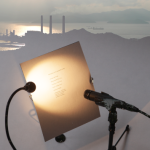
In his response to John Cayley, Dougherty takes the current concern with AIwriting as an opportunity to revive one of ebr's long-running threads; namely: the critical, contrarian riPOSTe.
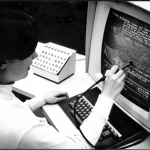
Pold extends Heckman's "thrilling (if not chilling)" critique to left-wing understandings and critical takes by theorists such as Walter Ong, Bernard Stiegler, and Vannevar Bush.

"Why," Serafina Aquilino asks, "is Internet literature so popular in China, compared to other countries?" The answer may be found in the Chinese "unique literary production." Print, nothing less, is responsible for China's world leadership in e-Lit. An unexpected emergence that Aquilino describes in her "brief history" of e-Lit in China, from Cai Zhiheng’s The First Intimate Contact (1998) to the present rise of Chinese literary forums and literary websites.

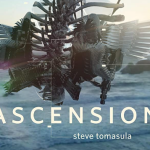
Taking an ironic, Icarian twist on Steve Tomasula's Ascension, Stuart Moulthrop situates Tomasula's novel in a subterranean, encyclopedic lineage that includes print fictions like Joyce’s Ulysses, Dos Passos’ U.S.A. trilogy, Pynchon’s Gravity’s Rainbow, DeLillo’s Underworld, David Foster Wallace’s Infinite Jest, and Zadie Smith’s White Teeth – novels that are, as Edward Mendelson put it, “the products of an epoch in which the world's knowledge is larger than any one person can encompass.” It's an experimental lineage that is, arguably, one of the more noteworthy carryovers from print to digital literature; a genre that Moulthrop (2013) and his near contemporary Michael Joyce (2007) have termed the “novel of internet.”
This article examines how the formation of data can be seen as an aesthetic way of making sense. Following work in digital aesthetics, the article proposes to understand digital artifacts and processes via formalization and operation of media language. Li traces this idea through several examples from recent literature, film, games, and artwork in South-East Asia. Together with these examples, Deleuze’s philosophical thoughts on a genesis of sense production are re-considered in order to understand a formal way of making sense in producing the new. The notion of “abstraction” from ancient Chinese mathematical thought offers a re-consideration of Deleuze’s “intensive virtual”, that is, the way the formal, the operative and abstraction determine the extensive intensive. Sense-Data and atmospheric language address computation’s materiality in engendering the formal and the operative modalities of media language, as a way of producing states of being and becoming in cultural activities in which the digital is an agency.

In his review of Mark Amerika's My Life as an Artificial Creative Intelligence (2022), David Thomas Henry Wright highlights Amerika's negotiation of human, nonhuman, symbiotic creative practices in comparison with more traditional (including traditionally experimental) forms of writing.

Davin Heckman offers thoughts on Matthew Kirschenbaum's now well-known essay in The Atlantic, The Textpocalypse (2023). Contemplating our own limits in digital media scholarship, including the reinforcing of technological determinisms, Heckman discusses the concept of transindividuation and its relationship with technology, or, the process of becoming an individual through participation in culture and society.
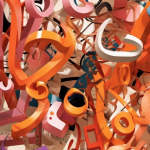
Avoiding the "twin pitfalls of either Luddite dread or AI boosterism," in this essay George MacBeth offers a close Re-Reading of Jhave's ReRites.

Rob Wittig and Alex Mitchell discuss the very beginnings and the most recent iterations of Netprov, with a focus on generative AI, collaboration and improvisational writing.
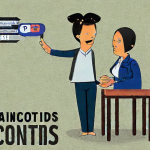
In this republished Medium essay, Ian Demsky takes a personal and playful dive into AI image generation.
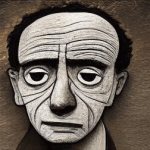
Rob Wittig and Scott Rettberg discuss the pioneer times in digital writing and electronic literature, a time long ago, in a Galaxy far away, when the audience at literary events did not have a clue about hypertext and links.
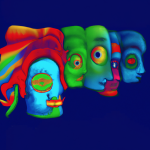
Rob Wittig and JT Johnson – a digital artist and writer – chat on the beginnings of Netprov, design of fictional worlds, and talent shows.
Image: DALL·E 2023-03-02 20.01.05 - "electronic literature can only exist up to a certain point, and then it dissolves itself as it becomes a discipline."