2026
Kiera Obbard talks to Lebanese-Canadian Instapoet Najwa Zebian about the affective power of multimedia poetry, distributing transformational art within toxic social media algorithms, and how to connect with an audience.
Constructed partially of quotations from Big Tech CEOs, academics, and journalists---while interlaying performance with AI cognition---Manuel Portela and Ana Marques da Silva's creative essay imitates a conversation between Rhetoric and Poetics. Through their interaction, the use of such techniques by marketers, doomsayers, and AI itself is laid bare.
In her comprehensive review of Escaja’s Realidad Mitigada: una experiencia AR (2025), Patricia López-Gay casts a critical eye across both Escaja's text and her creative practice, building a detailed picture of Escaja's decades-spanning artistic experimentations.
Mehulkumar Desai interviews one of the pioneers of early Electronic Literature and Hypertext Writing, Deena Larsen. The interview reveals Deena's intriguing process of ambiguity and ethics. It shapes Hypertexts beyond a medium to a way of thinking.
Steve Tomasula's Ascension refuses to let the novel sit still, weaving a plethora of multimodal practices into a form that insists reading is a physical, perceptual act. Saidi argues that identity and reality in the novel are never found but perpetually assembled by a reader who cannot remain passive.

Interface simulations work by making digital tools feel like the ones you already use, but what happens when you actually use those tools for a living? This review tracks how s.p.l.i.t.'s amber-on-black terminal horror turns most convincing precisely where it becomes most uncomfortable for the expert player.
Being a reader of Steve Tomasula for the past 30 years means following formally and materially innovative works of art and literature that contribute to a technological reshaping of the posthuman condition. Mary K. Holland, reminded in a waiting room in 2015 of Tomasula's impact on her own critical thinking, reflects on the eerie connections in 'fi about sci, not sci-fi'.

In this provocation, Maud Bougerol analyzes the teetering of boundaries in Steve Tomasula's "The Color of Flesh" (2015) where the reading experience lingers between linearity and non-linearity, and words and images transgress their usual thresholds.
Chris Funkhouser interviews musician, professor, digital and cross-disciplinary artist John Cayley on sound, poetry, coding languages, and the process of creation.
In this perceptive review, Mehulkumar Desai examines Deena Larsen's Stone Moon throughout Larsen's creative journey, first as an unreleased work in Storyspace in the 90s to being released in Twine in 2025. Uniting cultural and archival praxis, Desai's review discusses how we might look at creativity in the technological continuum.

Kiera Obbard reviews Reading #Instapoetry: A Poetics of Instagram, a new collection of essays on the often maligned genre of Instapoetry.

With a first-hand experience of observing and participating in the inception of the internet and early machine writing, Steve Tomasula reflects on his and Joseph Tabbi's interconnected history within a new form of the sublime. Using Tabbi's collected works as a framework, Tomasula explores the posthuman experience of narrative architecture.
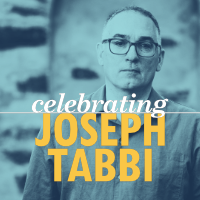
In this recollection—published as part of the Celebrating Joseph Tabbi gathering—Kurt Heintz chronicles the early days of a strand of the electronic literature community as it moves from Chicago's Belmont Avenue to the UCLA'S 2002 ELO Conference. In doing so, Heintz argues that, then and now, Joseph Tabbi acts a vital point of convergence for the electronic literature field.
In this interview—part of a series initiated by The NEXT—author Deena Larsen and academic N. Katherine Hayles discuss Hayles' involvement in the formation of the academic field of electronic literature, Hayles' approach to literary critique, and the reduction of anthropocentric bias in conceptions of cognition.

2025
Cecily Raynor reviews Cartografía crítica de la literatura digital latinoamericana, a collection of essays that shines the spotlight on the vast and diverse corpus of Latin American electronic literature.

In these edited and approved transcripts from interviews conducted by Will Luers for the ebr@30 online commemoration, Ewan Brenda, Davin Heckman, Lori Emerson, Steve Tomasula, Lai-Tze Fan, Rob Wittig, Will Luers, and Tegan Pyke reflect on how they came to know Joe Tabbi and got involved with ebr.
Hannah Ackermans introduces The Living Glossary of Digital Narrative via a discussion of digital communities and unintentional acts of exclusion, highlighting the importance of a shared vocabulary for accessibility in scholarship.

In this conversation with Yolanda De Gregorio Robledo, e-poet María Mencía discusses her journey as an artist and scholar. In doing so, María reveals her artistic interests, the influences the electronic literature community has had on her work, and the importance of highlighting women's contributions to the field of electronic literature as a whole.
A special call for papers celebrating the work of Joe Tabbi—electronic book review's founder and long-term editor-in-chief—which will be published in a special issue of electronic book review during the journal's 30th anniversary year.
The electronic book review Editorial Team discusses electronic book review's 30th anniversary, the journal's position at the junctures of multiple academic disciplines, the threat of an increasingly turbulent global stage, and the aspiration to continue providing a home for a future defined by resistance and unity.